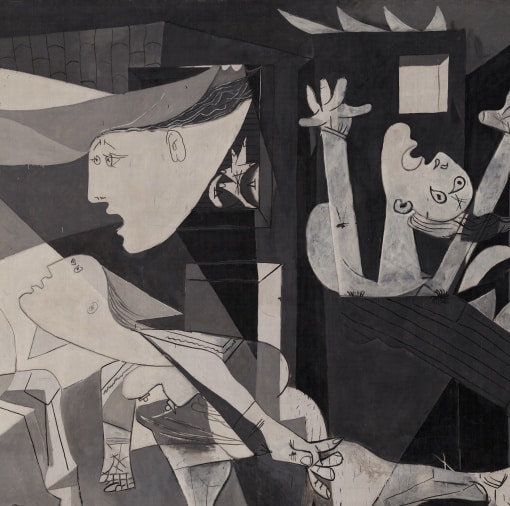
https://en.wikipedia.org/wiki/Guernica_(Picasso)#/media/File:PicassoGuernica.jpg
Guernica
Pablo Picasso, 1937
Picasso’s “Guernica” is not merely a painting; it is a powerful testament to the horrors of war and the enduring resilience of the human spirit. Created in response to the bombing of the Basque town of Guernica during the Spanish Civil War in 1937, this monumental masterpiece stands as a searing indictment of violence, oppression, and injustice.
From the anguished figures to the twisted forms of the buildings, every element of the painting is imbued with profound meaning, inviting viewers to contemplate the human cost of conflict and the moral imperative to resist tyranny and oppression.
“Guernica” serves as a timeless reminder of the artist’s role as a witness to history and a voice for the voiceless. Through his art, Picasso gave voice to the victims of war and oppression, challenging viewers to confront uncomfortable truths and take a stand against injustice. In this sense, “Guernica” is not just a work of art; it is a call to action, urging us to never forget the atrocities of the past and to strive for a more just and peaceful future.
Beyond its historical and political significance, “Guernica” holds broader cultural and artistic importance. It represents a radical departure from traditional modes of representation, as Picasso eschews naturalistic forms in favor of a more abstract and expressive style. In doing so, he revolutionized the language of art, opening up new possibilities for artistic expression and experimentation.
In today’s world, where conflict and violence continue to ravage communities around the globe, “Guernica” remains as relevant and urgent as ever.