Wikimedia Commons
The Arnolfini Portrait
Jan van Eyck, 1434
“The Arnolfini Portrait” by Jan van Eyck is considered a masterpiece of art due to its innovative use of oil paint, which allowed for unprecedented depth and detail.
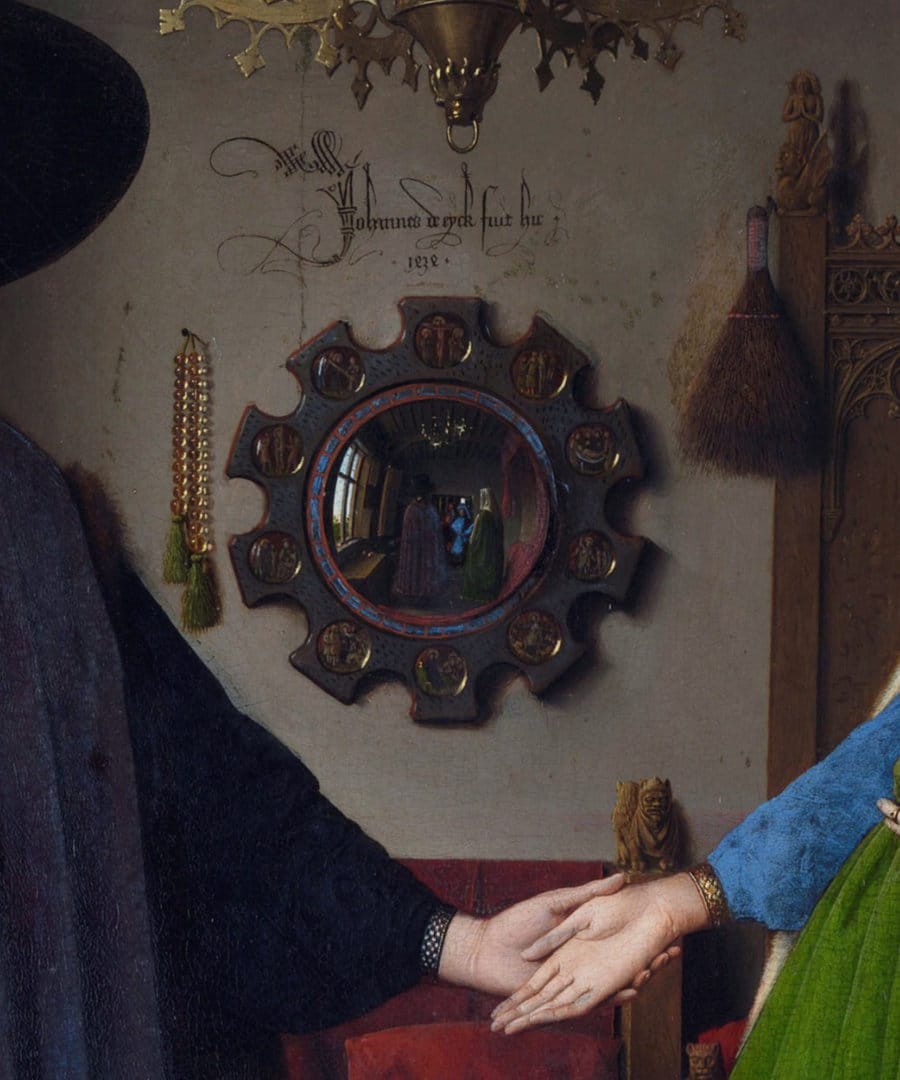
It is famous for its meticulous attention to detail and realism, visible in the textures of fabrics and the depiction of light.
The painting is rich in symbolism: the dog, the fruit, the chandelier, and many other elements add layers of meaning to the work.
The reflection in the small convex mirror showcases a clever use of perspective, incorporating new characters into the scene, possibly including van Eyck himself, a technique Velázquez would use 200 years later in his masterpiece Las Meninas.
This portrait of a bourgeois couple offers valuable insight into the life and culture of the 15th century.
Unlike many paintings of the time that focused on religious or aristocratic subjects, “The Arnolfini Portrait” portrays a wealthy merchant and his wife. This provides valuable insight into the domestic life and social status of the burgeoning middle class in 15th-century Flanders. The painting offers a detailed glimpse into the fashion, furnishings, and interior decor of the period. This makes it an important document for historians studying the material culture of the era.
Its influence on painting techniques and the development of portraiture is undeniable, solidifying its importance in the history of art.