https://en.wikipedia.org/wiki/The_Kiss_(Klimt)#/media/File:The_Kiss_-_Gustav_Klimt_-_Google_Cultural_Institute.jpg
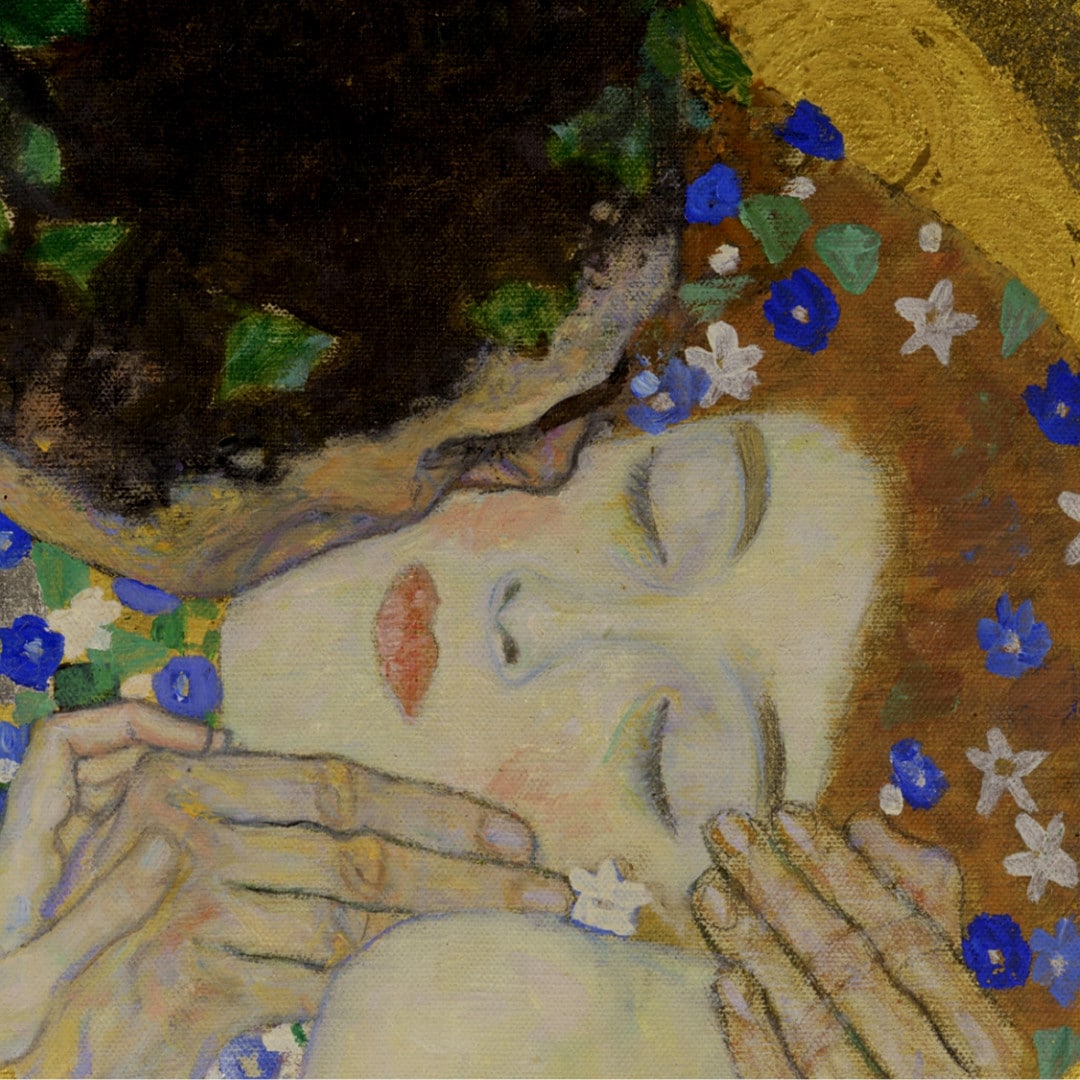
The Kiss
Gustav Klimt, 1907
Stands as an enduring testament to the power of love, beauty, and artistic expression.
One of the most striking aspects of “The Kiss” is Klimt’s use of symbolism and decorative elements. The shimmering gold background and elaborate patterns evoke a sense of luxury and opulence, reflecting the artist’s fascination with Byzantine and Islamic art. These motifs not only add visual richness to the painting but also suggest a spiritual dimension, hinting at the divine and eternal nature of love.
“The Kiss” holds deeper cultural and psychological significance. As a product of the fin de siècle era, Klimt’s work reflects the tensions and contradictions of his time, including changing social norms, shifting gender roles, and the search for personal and artistic identity. In this sense, “The Kiss” can be seen as a reflection of the human desire for connection and intimacy in the face of uncertainty and change.