https://en.wikipedia.org/wiki/Las_Meninas
The Meninas
Diego Velázquez, 1656
Velázquez’s “Las Meninas” (“The Maids of Honour”) is not just a painting; it’s a masterpiece that has sparked fascination, debate, and admiration for centuries. Created in 1656, this iconic work is housed in the Museo del Prado in Madrid and is celebrated as one of the greatest achievements of Western art.
At first glance, “Las Meninas” appears to be a simple portrait of a young princess surrounded by her ladies-in-waiting and attendants. However, Velázquez’s composition is far from straightforward. The painting is a complex interplay of light, space, and perspective, inviting viewers to explore its depths and unravel its mysteries.
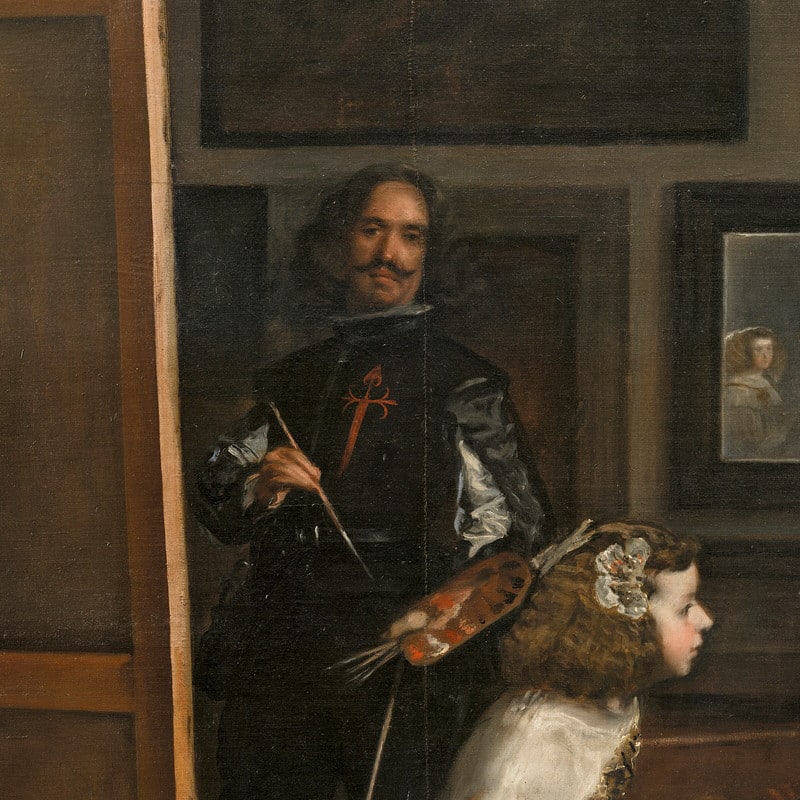
One of the most intriguing aspects of “Las Meninas” is Velázquez’s inclusion of himself in the scene, standing at his easel and painting the very scene we see before us. This self-referential gesture blurs the boundaries between reality and illusion, challenging viewers to question their perception of truth and representation.
Maybe the most important aspect of “Las Meninas” is its profound exploration of the relationship between artist, subject, and viewer. By placing himself within the painting, Velázquez invites us to consider the role of the artist as both observer and participant in the creation of art. At the same time, the gazes of the figures within the scene seem to follow us, implicating us in the act of looking and forcing us to confront our own role as viewers.
The painting reflects Velázquez’s profound insight into human nature, as he captures the personalities and relationships of the figures with remarkable sensitivity and nuance.
In today’s world, where the boundaries between reality and representation are increasingly blurred, “Las Meninas” remains as relevant and captivating as ever. It serves as a reminder of the enduring power of art to challenge, inspire, and provoke thought, inviting us to reconsider our assumptions and perceptions of the world around us.