The Essential La Pedrera
La Pedrera, also known as Casa Milà, is one of Barcelona’s most iconic buildings and a masterpiece of modernist architecture designed by Antoni Gaudí. Built between 1906 and 1912, it was originally conceived as a residential building, but today it stands as a cultural landmark and a UNESCO World Heritage Site. Its undulating stone façade and organic forms broke radically with the architectural conventions of its time.
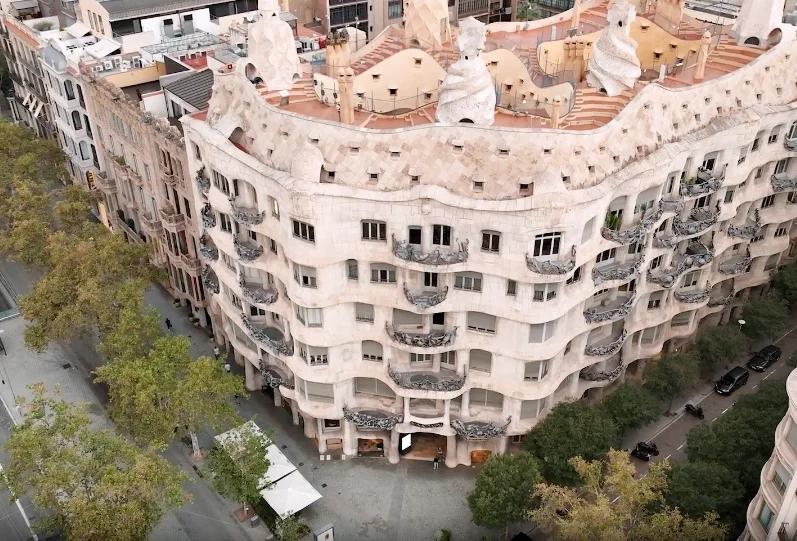
One of the most striking features of La Pedrera is its sculptural exterior, which seems to flow like a natural rock formation rather than a traditional building. Gaudí eliminated straight lines almost entirely, drawing inspiration from nature to create a living, breathing structure. Wrought-iron balconies, designed as abstract, almost surreal forms, add to the building’s expressive character.
Inside, La Pedrera reveals Gaudí’s innovative approach to space, light, and structure. The open floor plans, interior courtyards, and natural ventilation systems were far ahead of their time, anticipating principles of sustainable and human-centered design. Visitors can explore restored apartments that offer insight into daily life in early 20th-century Barcelona.
The rooftop is perhaps La Pedrera’s most unforgettable space. Its dramatic chimneys, ventilation towers, and stairwells resemble a surreal landscape of warriors or abstract sculptures, offering panoramic views over the city. This rooftop has become one of Barcelona’s most photographed sites and a powerful example of architecture as artistic expression.
Today, La Pedrera functions as a vibrant cultural center, hosting exhibitions, concerts, and events that connect Gaudí’s legacy with contemporary culture. More than a historic monument, it remains a living space where architecture, art, and social life continue to intersect, reinforcing Barcelona’s identity as a global cultural capital.